Spanish Translator Q&A
What made you want to be a translator and what was your journey to become one?
I’ve loved reading and writing for as long as I can remember. I originally wanted to become a journalist, until an international school trip across Europe changed my plans! Using my language skills out in the real world made me fall in love with translation. I immediately started researching the best universities for a Translation degree, and I’ve been at it ever since – combining my love for words with a deep fascination for how we communicate.
What does a day in your life look like?
I usually start by making a coffee and reviewing my tasks in a paper planner – there’s something about physically crossing things off that feels so satisfying! My mornings are dedicated to deep-work translation where I need maximum concentration. I tend to leave the afternoons for admin and marketing tasks. Once the laptop is shut, you’ll usually find me at a painting class, out for a walk, or at the local hobby shop playing card games with friends.
How has the industry changed since you started working as a translator, and where do you see it going next?
The rise of AI is obviously the biggest shift. However, I see the industry splitting in two: while simple “information” is being commoditised by machines, things like “emotion” and “brand identity” are becoming much more valuable. I believe the future lies in cultural consultancy, where we don’t just translate words, but advise on how a brand should actually feel in a different culture.
What do you think about the relationship between technology and translation?
I see technology as a massive efficiency booster rather than a replacement for the work I do. It’s not just about AI; it’s the whole setup. I’ve used CAT tools for years to keep things consistent, and now I use newer tools to handle the mechanical stuff, like digging through research or double-checking tricky terminology. When tech does the “heavy lifting”, I can use my brainpower on my favourite part: the creative side of the project.
What are the top 3 ‘tools’ from your translator arsenal that you can’t live without?
Trados: essential for consistency, especially on long-term, ongoing projects.
GoldenDict: this app is brilliant for checking multiple dictionaries and online resources in a single search.
My Spanish combinatory dictionary by Ignacio Bosque: it’s my go-to for finding the perfect collocations and natural-sounding phrases.
Do you prefer working alone in your own office/home, or sharing coworking spaces with others, and why?
I’m definitely #TeamCoworking! I work from a coworking space in the city centre with lovely views of the industrial port and its colourful containers. I tried working from home for a few years, but I found it a bit too isolating. I love being able to grab a coffee and chat with other entrepreneurs and freelancers; it keeps me motivated!
What do you look for in your ideal client?
I work best with people who see the relationship as a partnership. My ideal client provides a clear brief but is also happy to have a quick back-and-forth if I have questions. When a client takes the time to explain the “why” behind their project, it makes it much easier for me to deliver exactly what they need.
What should clients look for in their ideal translator?
Beyond the obvious language skills, look for someone who truly understands your niche and doesn’t just “swap words.” You want a translator who gets the “personality” of your brand. Reliability is just as important; a Project Manager should feel confident that the work will arrive on time and that communication will be easy and professional throughout the process.
What’s one thing you wish more LSPs and end clients knew?
I wish more people realised how much the context matters. When we receive a list of isolated sentences without knowing where they’ll appear (like in a tiny app button, a large headline, or a technical manual) it’s much harder to get the tone right. A little bit of extra info about the “where” and the “who” makes a huge difference.
How important do you think the relationship between Project Manager and translator is?
Very important! An organised PM who is thorough with reference materials and who trusts my judgment makes the whole process smoother. When there’s mutual respect and clear communication, I feel comfortable flagging potential issues or making suggestions early on, which usually saves everyone time and avoids unnecessary stress.
What kinds of jobs do you find the most challenging and why?
Anything with strict character limits, like Google Ads. Trying to pack a big concept into a tiny space while making it sound effortless is a real puzzle. It takes a lot of mental energy, but it’s easily the part of the work I find most satisfying!
How do you look after yourself and cope with stressful days?
On very busy days, I plan everything in advance to avoid decision fatigue. I time-block my deep focus work and, for complex projects, I break the translation down into manageable daily batches. After work, I switch off with offline hobbies like reading or painting to get away from screens for a while.
What is it you like in particular about working for Andiamo?
I love the friendly, professional team at Andiamo. It’s great hearing about people’s holidays and special moments; it makes us translators feel like remote coworkers rather than just an agency and a vendor. After several years of working together, I really value that personal connection.
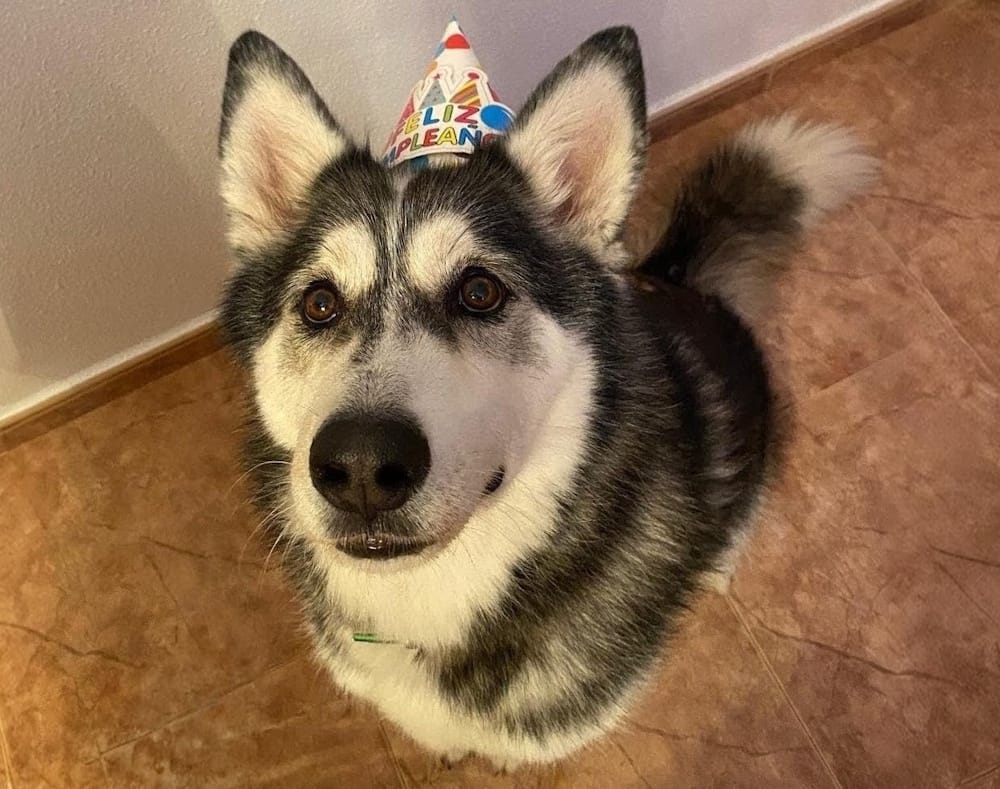
Everyone who works at Andiamo! is a massive animal lover, so this is a shameless call for you to please tell us about any pets you have! (Pictures highly encouraged.)
I don’t have any of my own at the moment, but here’s a picture of my brother’s dog, Balto (yes, like the movie!). This was taken when we were celebrating his last birthday.