Portuguese Translator Q&A
What made you want to be a translator and what was your journey to become one?
I have always had a strong interest in foreign languages. As a child, I was fascinated by hearing tourists speak languages I could not understand, which sparked my curiosity and desire to learn other languages. That curiosity marked the beginning of my journey.
In my final year of secondary school, I had Translation as one of my subjects, and it was then that I realised translation was exactly what I wanted to pursue. I subsequently completed a university degree in Translation at master’s level, which formally launched my professional path as a translator.
What does a day in your life look like?
Depending on how busy my day looks, I always start with either a long or short walk with my dog, Azura. After that, I begin work in my office, with a few breaks along the way, as my cats enjoy parading across my desk, a true catwalk.
How has the industry changed since you started working as a translator, and where do you see it going next?
I have witnessed major changes in the translation industry since I began working as a full-time professional translator in 2001. At that time, the internet was only a glimpse of what it is today, and many source materials were still on paper. Preparing a quotation often meant counting words manually, and in several cases translations were delivered on floppy disks.
As the internet expanded, a true revolution followed. Translation tools such as Trados emerged and fundamentally changed the way translations were produced. There was widespread concern that this would lead to the extinction of the profession; instead, these tools streamlined workflows and contributed to improved consistency and quality Later, the introduction of machine translation and post-editing (MTPE) raised similar fears, which again proved unfounded.
We are now experiencing another major transformation, with renewed concerns that translation may become an obsolete profession. In my view, this evolution represents the emergence of powerful tools that can significantly accelerate output. Tasks that once required hours of terminology research can now be completed in minutes, and many processes are becoming more efficient.
As I work primarily in the medical field (a highly regulated sector) I do not currently see a decrease in workload. On the contrary, this area continues to require substantial human expertise to meet strict regulatory and quality requirements. In addition, the volume of medical information being produced is increasing, generating ongoing demand for translation. In the near future, translators may shift into roles primarily as reviewers or language consultants; however, human involvement will remain essential and cannot be fully removed from the translation process.
What do you think about the relationship between technology and translation?
I believe technology and translation go hand in hand, and their connection keeps getting stronger. Over time, technology has become one of a translator’s best allies. From specialized software to online platforms, these tools have transformed how we approach translation, making it faster, more consistent, and often less repetitive.
But it’s important to remember that technology doesn’t replace translators. Instead, it takes care of the repetitive tasks so we can focus on what really matters: the meaning behind the words, the subtle nuances, and the specific knowledge needed for each field. Especially in areas that are complex or highly regulated, this balance between tech and human insight is key.
What are the top 3 ‘tools’ from your translator arsenal that you can’t live without?
Studio/memoQ, MedDRA, and Xbench.
Do you prefer working alone in your own office/home, or sharing coworking spaces with others, and why?
I strongly prefer working alone in my own home office. I need a dedicated space and a quiet environment to maintain focus and concentration. Working in shared coworking spaces would be distracting and ultimately detrimental to the quality of my work.
What do you look for in your ideal client?
I value working with clients who respect their translation partners and see them as people, not as an anonymous “Dear translator.” I appreciate clients who value quality, are open to communication, and are responsive to questions that may arise during a project.
What should clients look for in their ideal translator?
Clients should look for a translator who truly understands their needs and is aligned with their values. An ideal translator takes their profession seriously, demonstrates reliability and attention to detail, and communicates clearly throughout the project.
Equally important is professional integrity: a good translator is honest about their areas of expertise and will decline assignments that fall outside their competence. Subject-matter knowledge, consistency, respect for deadlines, and a commitment to quality are also key factors in building a successful and trustworthy working relationship.
What’s one thing you wish more LSPs and end clients knew?
I wish more LSPs and end clients understood that high-quality translation isn’t just about converting words from one language to another, it’s a professional service that demands subject-matter expertise, time, and thoughtful decision-making. When translators are treated as true collaborators instead of interchangeable resources, the results are significantly better: fewer revisions, higher quality, and a much smoother workflow for everyone involved.
How important do you think the relationship between Project Manager and translator is?
I believe the relationship between the Project Manager and the translator is absolutely essential. Having worked on both sides (both as a Project Manager and as a translator) I’ve seen first hand how a strong, respectful working relationship can make a real difference in the success of a project.
Clear communication, mutual trust, and a solid understanding of each other’s roles help avoid problems, streamline the workflow, and raise the overall quality of the work. At the end of the day, we’re all human, and positive professional relationships make collaboration not only more effective but also more enjoyable, for everyone involved.
What kinds of jobs do you find the most challenging and why?
Interestingly, I often find small projects to be the most challenging. They usually consist of just a few isolated sentences pulled from a larger text and are often delivered with little or no context. On top of that, their size tends to create the impression that they’re “quick tasks,” which can lead to tight deadlines and added pressure.
Marketing texts can also be demanding. They require close attention to tone, intent, and creative phrasing to resonate with the target audience. That said, I really enjoy the creative aspect they involve and find these types of projects especially rewarding to work on.
How do you look after yourself and cope with stressful days?
I cope with stressful days by sticking to a clear routine and setting realistic boundaries around my workload. Taking regular breaks, getting outside for walks with Azura, and simply stepping away from the screen when needed all help me reset and refocus.
Talking things through with someone who understands my work (usually my husband, who’s also a translator) really helps, too. It gives me perspective, emotional support, and a reminder that I’m not alone in the challenges of the job.
Altogether, these habits help me stay grounded, manage stress, and maintain both my productivity and well-being.
What is it you like in particular about working for Andiamo?
I particularly enjoy working with Andiamo! because I feel respected and trusted as a professional. I also appreciate the strong sense of teamwork and the shared love for animals, which makes the collaboration not only smooth but truly meaningful and rewarding.
Everyone who works at Andiamo! is a massive animal lover, so this is a shameless call for you to please tell us about any pets you have! (Pictures highly encouraged.)
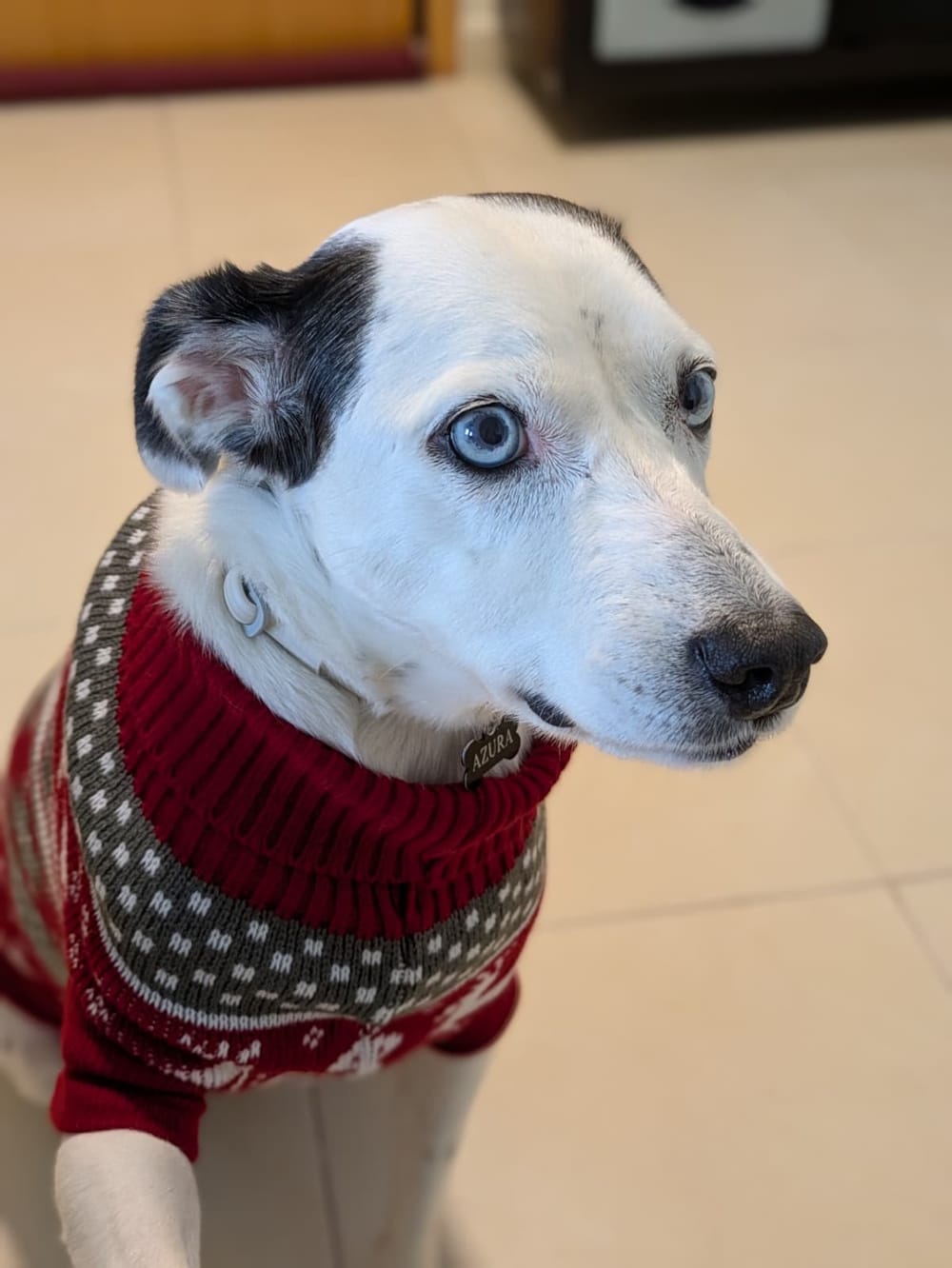
Our family of four humans adopted Azura three years ago. She was already an adult when she came to us, so we don’t know her exact age. Azura is a lovely dog, sweet and very friendly with people, though a bit wary around other dogs. She absolutely loves treats and being petted, and she’s quite sensitive to loud noises like thunder and fireworks. She also has the most striking blue eyes, and she definitely knows how to use them to get what she wants!
Almost two years ago, we welcomed Haruki and Hori, two orange tabby brothers with very different personalities. Haruki is an indoor cat who enjoys curling up on our laps, napping, and chasing his brother around the house a few times a day. Hori, on the other hand, would much rather be an outdoor explorer. He’s always searching for the highest perch he can find, loves to play, enjoys pulling magnets off the fridge, opening cabinets, and has a strange but persistent habit of chewing on our fibre optic cable, so we always keep a spare, just in case!